Issue 14 ·
My Hardest Client
Infinite taste, zero constraint, and a house that needed an Act of Parliament to stop.
The worst client of my career pays late, moves every deadline, and second-guesses decisions that were settled weeks ago. He has never once been fired, because the practice can't function without him. He's me.
For nine weeks my own website sat at ninety-five per cent finished. Nine projects photographed and written up. Pages built, words argued over, the last few tasks so small I'm embarrassed to list them. Every Monday it went to the top of the list. Every Friday it hadn't moved. Meanwhile actual clients, the ones with contracts and opinions, got their drawings on time.
The difference isn't mysterious. A paying client comes with gravity: a fee, a date, a person at the other end of the phone whose patience is finite. The self-commission has none of that. No deadline that bites. No one to disappoint but yourself, and you've seen how you handle that. Infinite taste, zero constraint. It sounds like freedom and behaves like quicksand.
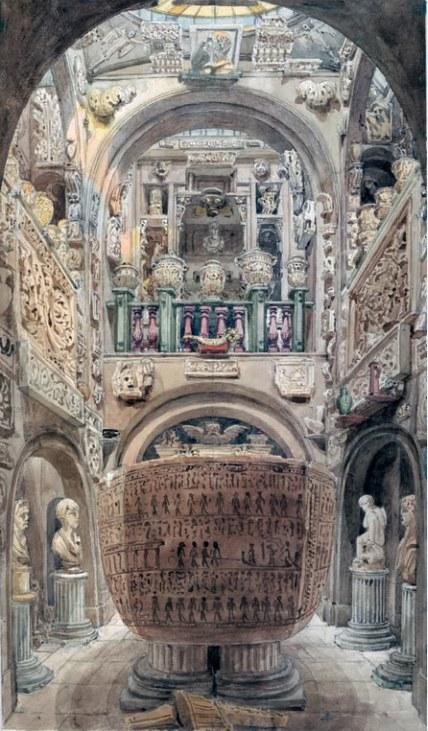
Architects have always been terrible clients for themselves. John Soane bought No. 12 Lincoln's Inn Fields in 1792, then No. 13, then No. 14, and spent the next thirty years rebuilding them into a single continuous experiment: the domed breakfast room, the convex mirrors, the sarcophagus of Seti I in the basement, walls of paintings hinged so they open like cupboard doors. He never finished. Stopping required an Act of Parliament, passed in 1833, freezing the house exactly as it stood at his death. The only client who could make Soane down tools was the British state.
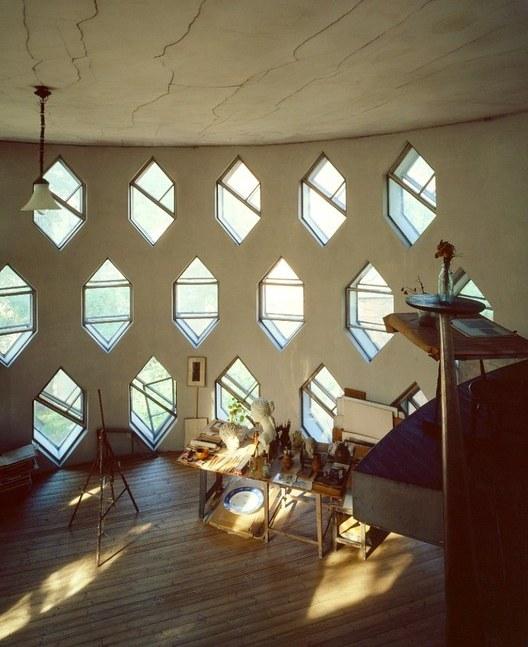
Konstantin Melnikov built himself two interlocking cylinders in a Moscow lane in 1929, walls a brick honeycomb pierced by some sixty hexagonal windows. When Soviet architecture turned against him, he withdrew into the house and kept working on it for another forty years. The house stopped being the practice's advertisement and became the entire practice. Luis Barragán built his house at Tacubaya in 1948 and lived there for four decades, moving walls, repainting planes of pink and ochre, testing the light. He died there in 1988 with the house still, by his own standards, in progress. It was the first individual house in Latin America to make the UNESCO World Heritage list: a masterpiece its architect never signed off. And Wright, who you met last issue, mid-leak, played the same game for forty-eight years without once calling it finished.
The self-commission is architecture's most honest genre. It's the building as manifesto, and the trap is built into the brief. There is nobody to say stop. More dangerously, there is nobody to say ship.
What finally shipped mine wasn't discipline. It was a date said out loud to actual people, and a Monday spent deliberately doing nothing: a full day off with the family, no screens, Taiwan heat. Tuesday morning I sat down, thought fuck it, and the week went one way. The site went live on Thursday. Nine weeks of niggling, undone in four days.
Here's the lens. Constraint isn't the enemy of the work. It's the formwork. The fee, the deadline, the client's finite patience: that's the mould the concrete needs to set. Pour without it and the work stays liquid forever, endlessly adjustable, never finished. If a project of yours has been sitting at ninety-five per cent, the folder renamed final_v3, the missing ingredient probably isn't time. It's a client. Borrow one. A public date works fine.
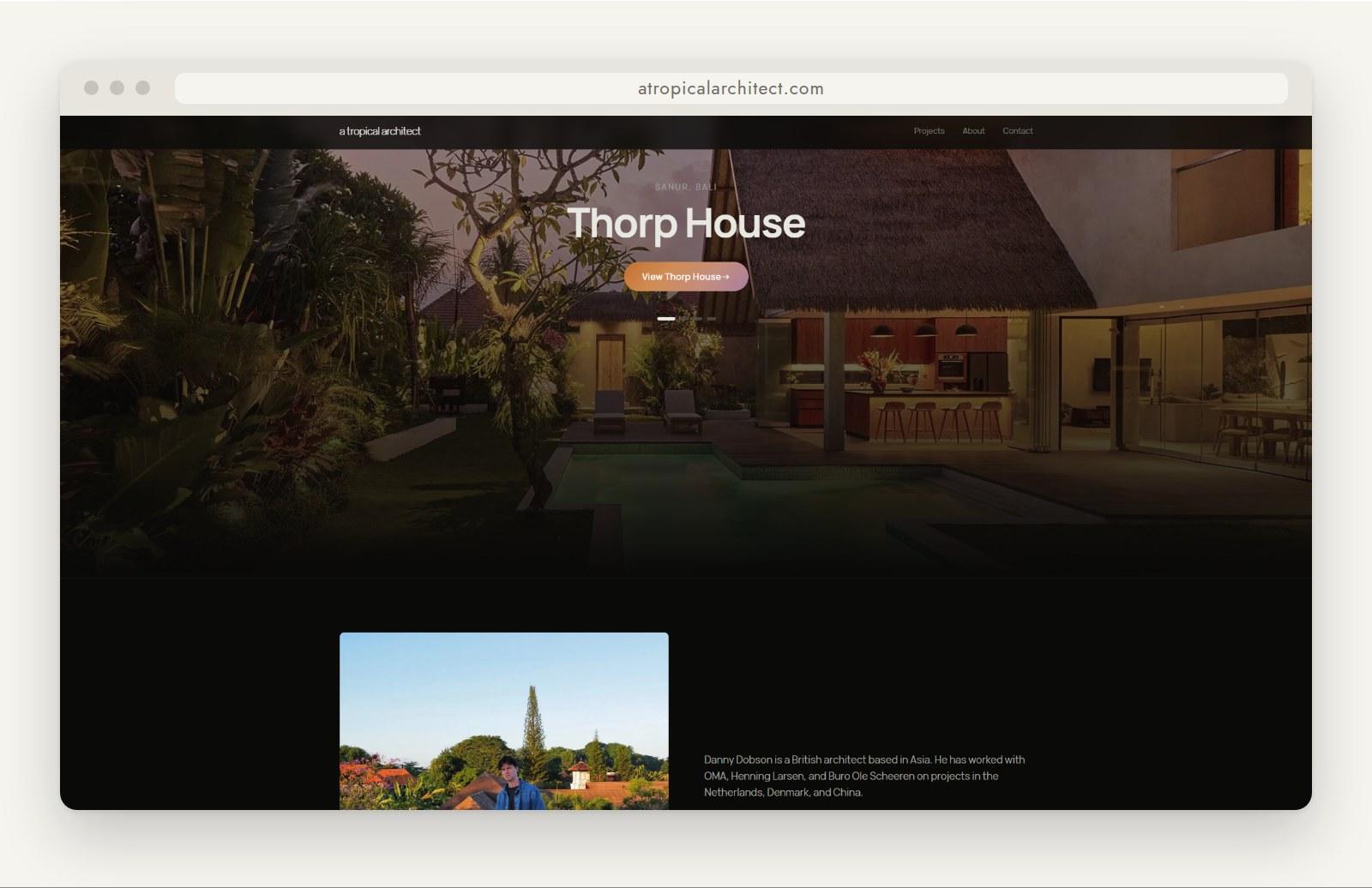
The site is live: atropicalarchitect.com. My hardest client is delighted, for now. He's already mentioned a redesign.
Have a look, and reply and tell me what you'd change. Apparently I take direction better from other people.
See you next week,
Danny