Issue 2 ·
The Building The Chairs Designed
Five hundred designers. No conversation. Same answer.
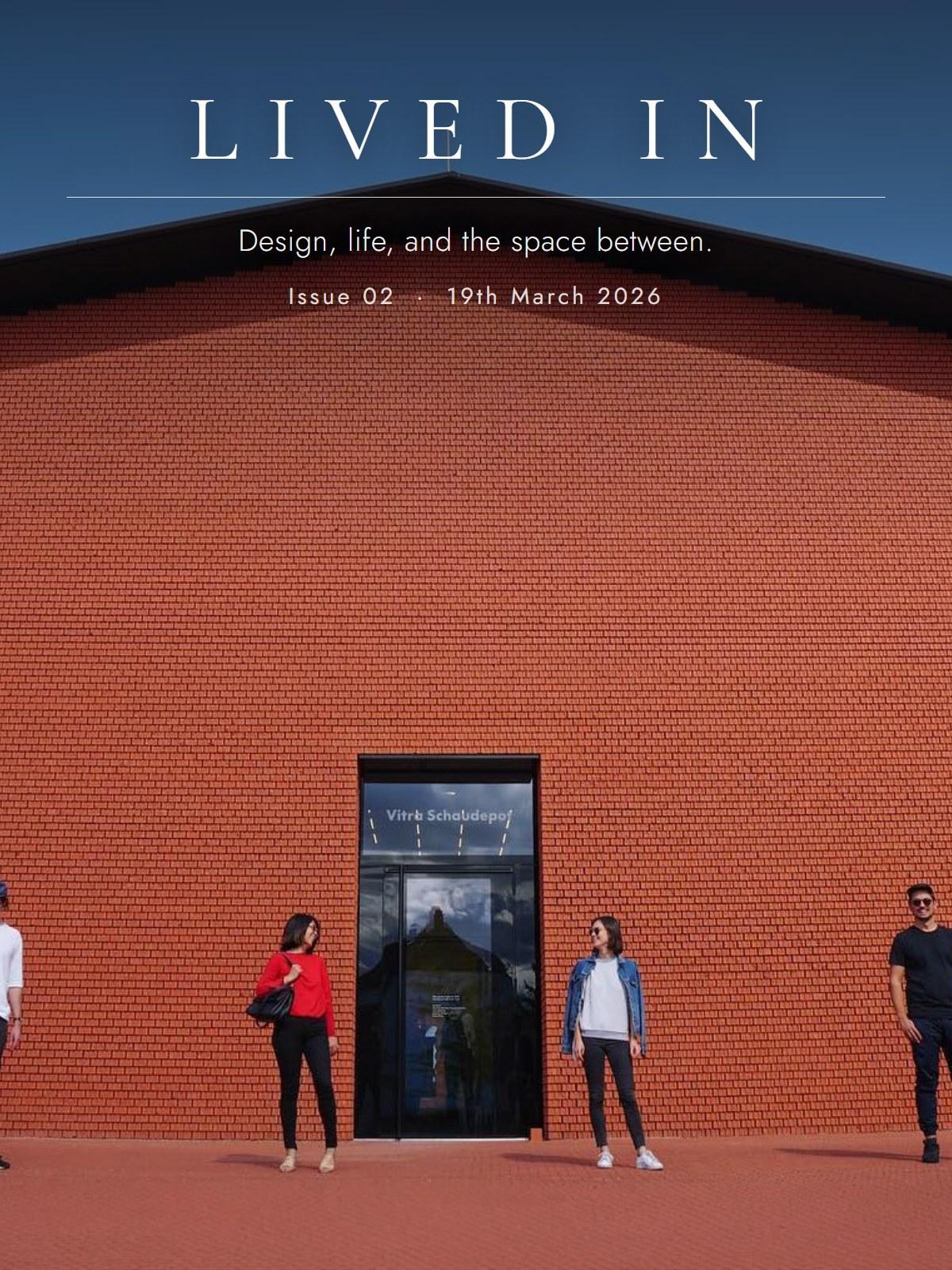
The Schaudepot at Vitra is one of those places that hits you before you've processed what you're looking at.
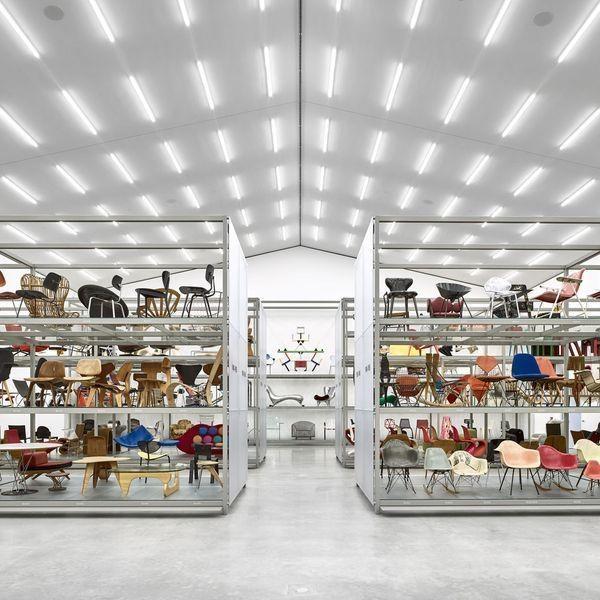
You walk in, and there are chairs; hundreds of them, each one a fully resolved argument about how someone should sit in it. An Eames shell next to a Panton next to a Wegner next to a Prouvé. Every designer's personality is present and accounted for, none of them agreeing, all of them shouting at once. It should be chaos.
It isn't. I’ve been thinking about why.
I visited in 2017, just before I moved to Bali - a last European immersion before five years of open verandas and tropical rain. I was with my wife and a couple of friends who work at the office that built it. Walking around with people who know how a Herzog & de Meuron building is actually made changes what you notice. Not the chairs this time - the ceiling. A grid of fluorescent tubes across the whole pitched roof, no windows anywhere, so the light never moves. The way the walls almost went unnoticed.
Eliel Saarinen said: always design a thing by considering its next larger context. A chair in a room, a room in a house, a house in an environment. His son Eero took that literally — he spent two years redesigning a chair because he couldn't stand the visual clutter of four legs under a table. The result was the Tulip: one pedestal, no legs, the whole thing resolved into a single gesture. The father wrote the rule. The son turned it into furniture.
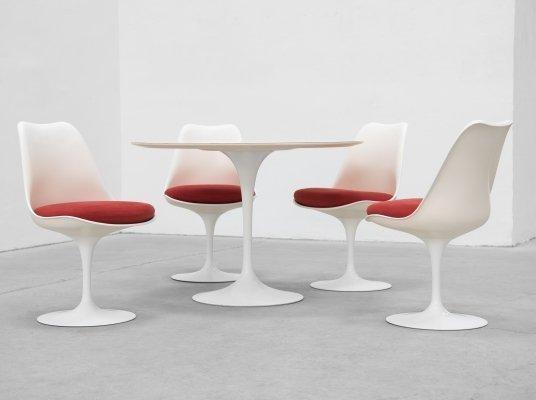
Standing in the Schaudepot, surrounded by the results of that same logic applied five hundred different ways, it started to feel less like a design principle and more like a description of what had actually happened there. Every designer in that collection had followed the thinking outward from their object. They'd each asked: what does this chair need the home to be? Quiet. Unassertive. Precise. A surface that holds without competing.
Five hundred designers, no conversation, no brief. All of them arriving at the same answer.
Herzog & de Meuron just built it. A warehouse so carefully restrained it disappears - white walls, a concrete floor, one grid of tubes overhead, nothing asking for attention. The chaos of the collection only works because the container refuses to join in. The calm isn't aesthetic. It's structural. Take it away and all those personalities cancel each other out.
You've walked into a home and known immediately that something was off, without being able to say what. Nine times out of ten it's this: a strong object surrounded by a space that didn't listen. Every well-designed thing carries its designer's thinking outward - it already has opinions about the wall behind it, the light above it, the floor beneath it. Most homes ignore those opinions entirely. The object is talking. The room just isn't answering.
See you next week,
Danny