Issue 11 ·
A Building That Doesn't Need AC
Someone picked a fight with me in the comments and turned out to be wrong.
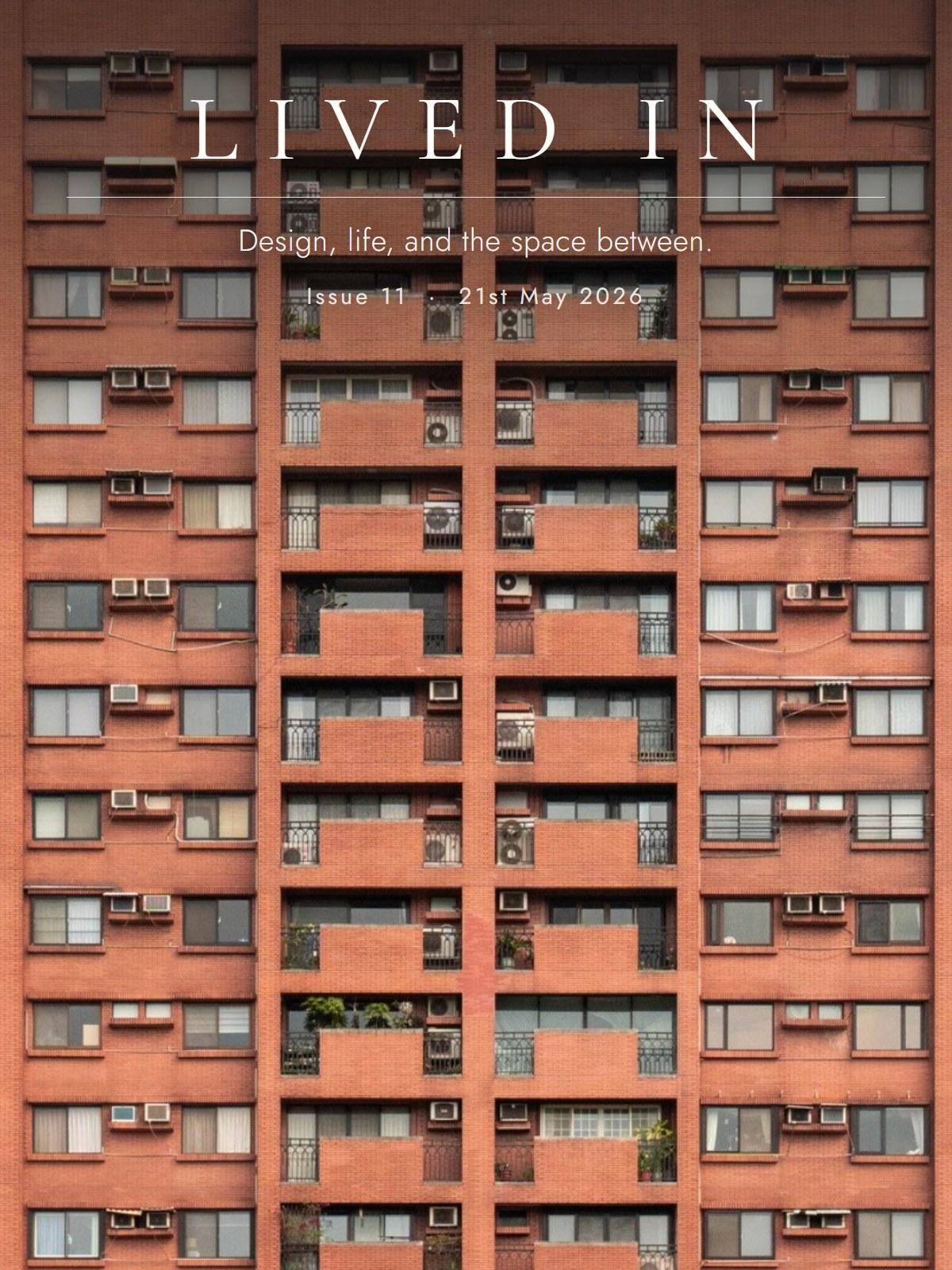
A hundred and nineteen weeks ago I posted a video about hiding air conditioner units. Someone picked a fight with me in the comments of it. He thought I was talking shit.
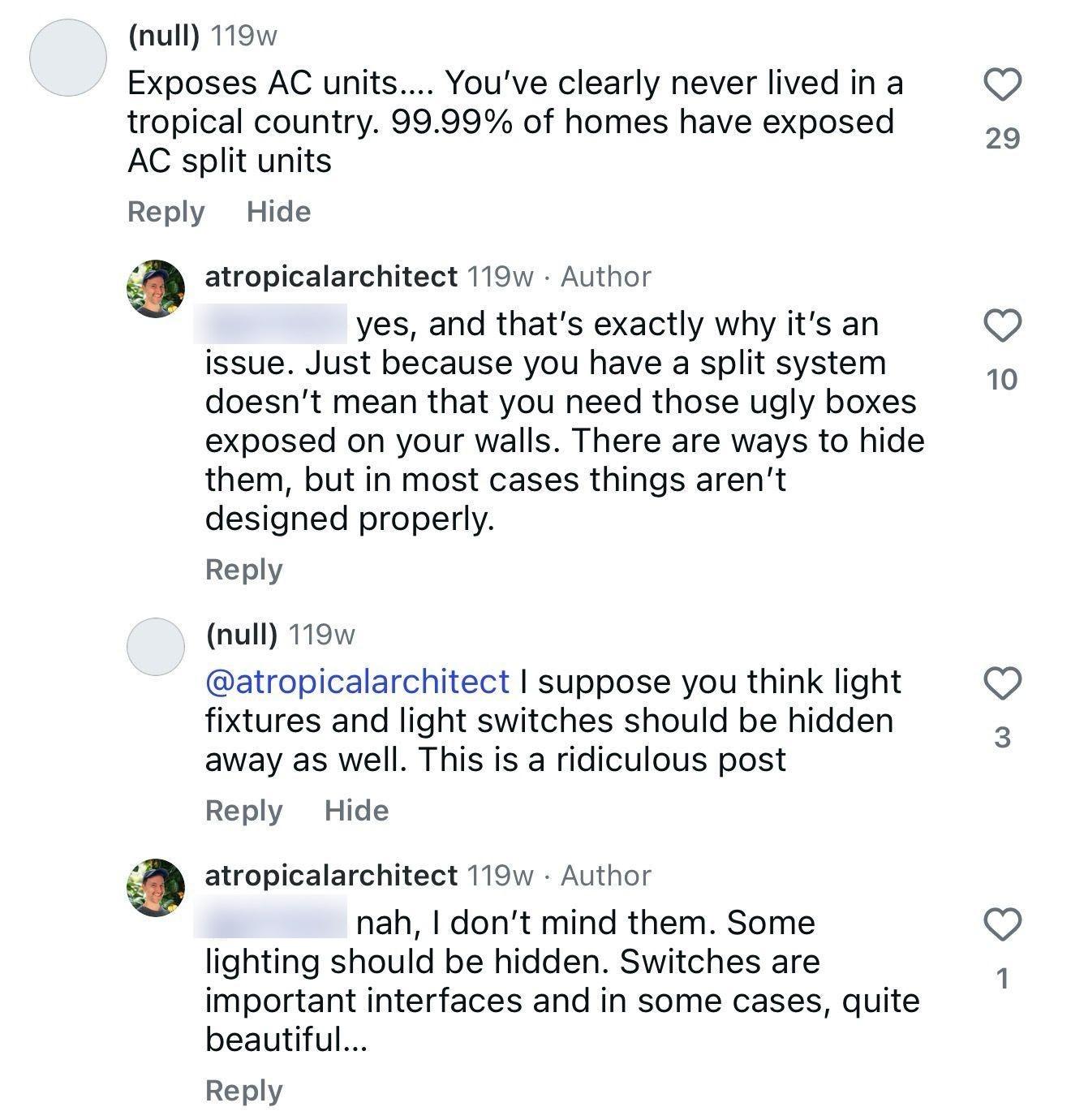
We went back and forth for longer than either of us should have, and the whole thing sat untouched until last week, when it came back to me for no obvious reason while I was at my desk. I worked out fairly quickly why. I am currently designing a building where I am trying very hard not to use air conditioning at all.
The air conditioner is not a feature of tropical architecture. It is the failure of it.
This week I spent an hour on a call with my mate Steve, who consults on energy efficiency. He went through the drawings for a villa I am designing in Bali and gave me notes. Move the stack vent further from the prevailing wind. Deepen the eave on the west elevation by another 300mm. Cut a second opening into the courtyard wall so the cross-draught actually crosses. None of it was glamorous. All of it was the difference between a building that breathes and a building that runs an air conditioner twelve hours a day.
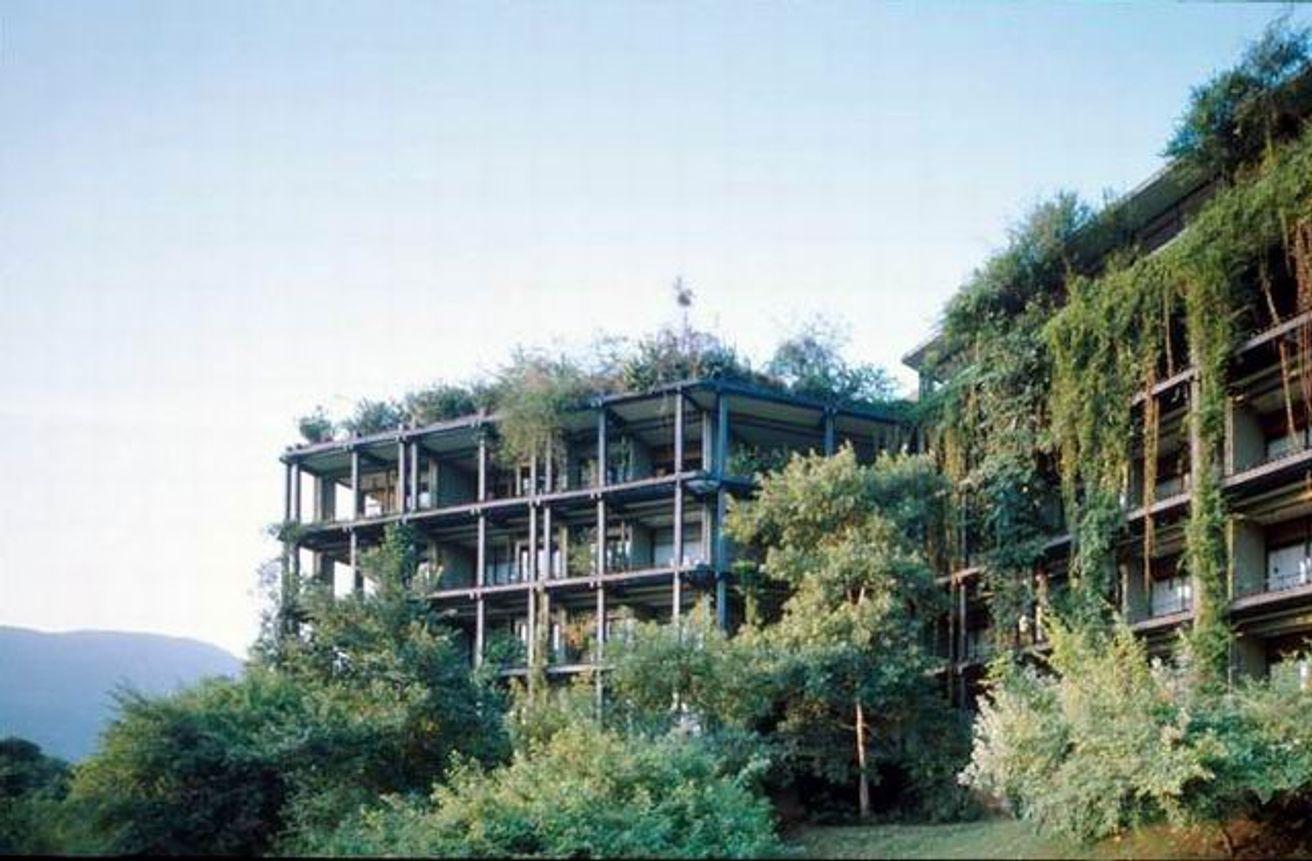
The man whose argument the entire call was downstream of is Geoffrey Bawa, who died in 2003, having spent fifty years insisting — in plan — that the tropics did not need to be sealed off from themselves to be inhabited. At the Kandalama Hotel, finished in 1994, he refused the original site beside Sigiriya rock and put the building eleven kilometres away, draped along a cliff above a lake, so the rock and the jungle did the work the architecture didn't need to. Long corridors open to the jungle on one side, the breeze moving through the building rather than around it. The hotel is thirty years old and still feels cooler inside than out.
The moment you bolt an HVAC unit onto a sealed glass box and call it a villa, you have stopped designing for the climate and started designing against it. Steve's notes weren't new ideas. They were the same moves Bawa was making fifty years ago, applied to a small urban plot with a different orientation.
I sent the revised drawings back this morning. I'll find out on the first hot afternoon after the walls go up whether the building does what the drawings say it will.
Have you ever stood inside a building that felt cooler than the air outside, without anything running?
See you next week,
Danny