Issue 16 ·
Why Is A Brick A Brick?
The oldest brick in the world has thumbprints on it.
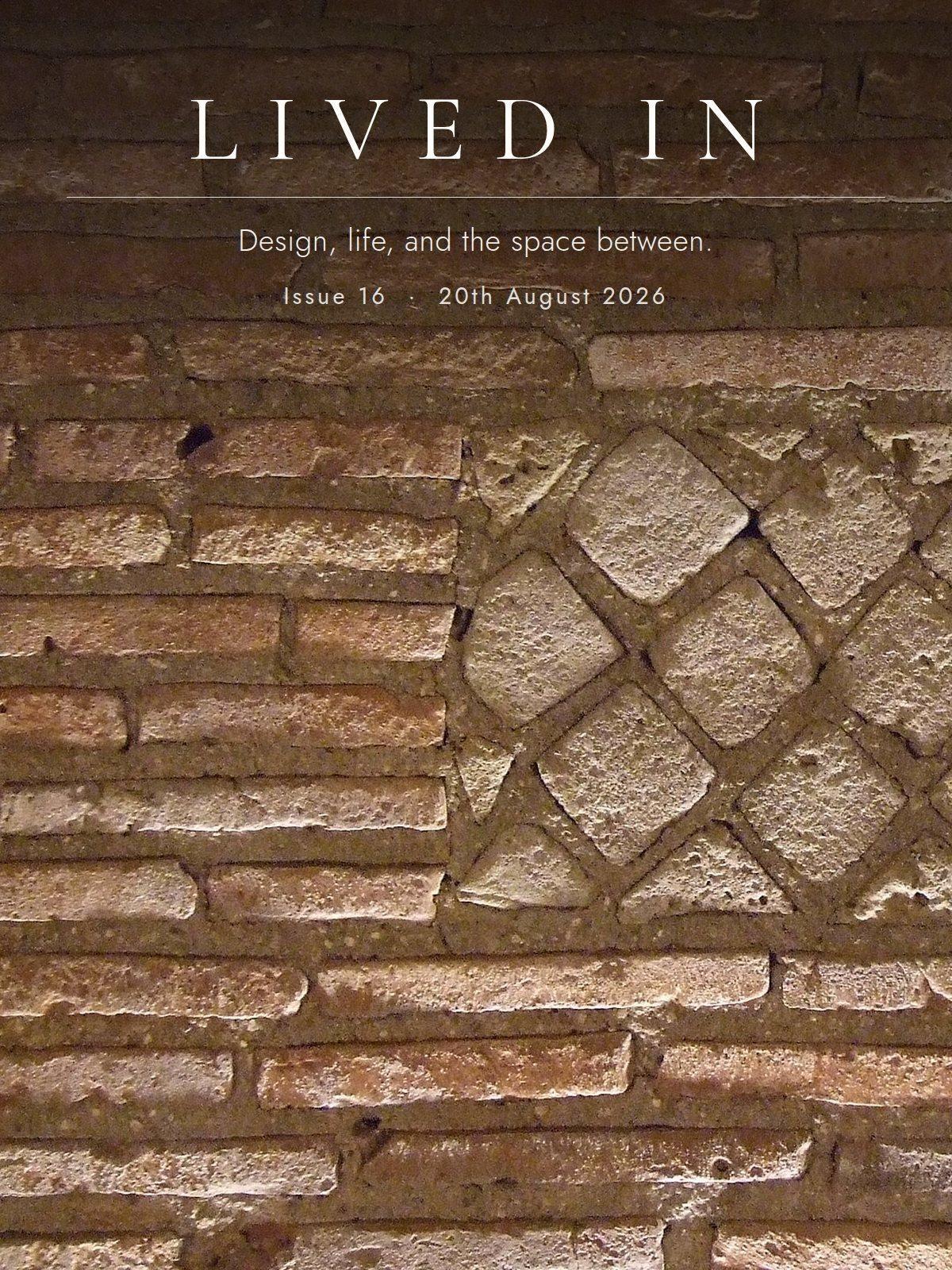
A brick is born in the hand.
The oldest bricks anyone has found are at Jericho, about ten thousand years old. There is no mould. Somebody scooped up mud and patted it into a loaf, and within a thousand years the makers were pressing rows of thumbprints into the top so the next course would grip. The oldest bricks in the world have fingerprints on them.
It has stayed in the hand ever since, because a brick has to be laid. One hand, because the other one is holding a trowel. Today the standard brick is 215 by 102.5 by 65 millimetres, and that middle number is the width of a grip, specified to a tenth of a millimetre, in a unit that has never met a hand.
Everything in building used to work this way. A foot is a foot. A cubit is a forearm. A span is the reach of your fingers. The units were bodies because the work was done by bodies, so the man doing the work was never without his measuring device.
Then precision meant smaller, and smaller meant leaving the body. The metre was fixed in 1791 as one ten-millionth of the distance from pole to equator. The millimetre is a thousandth of that. It is extraordinarily useful and it refers to nothing you have ever touched. You cannot picture a millimetre. You can only measure one.
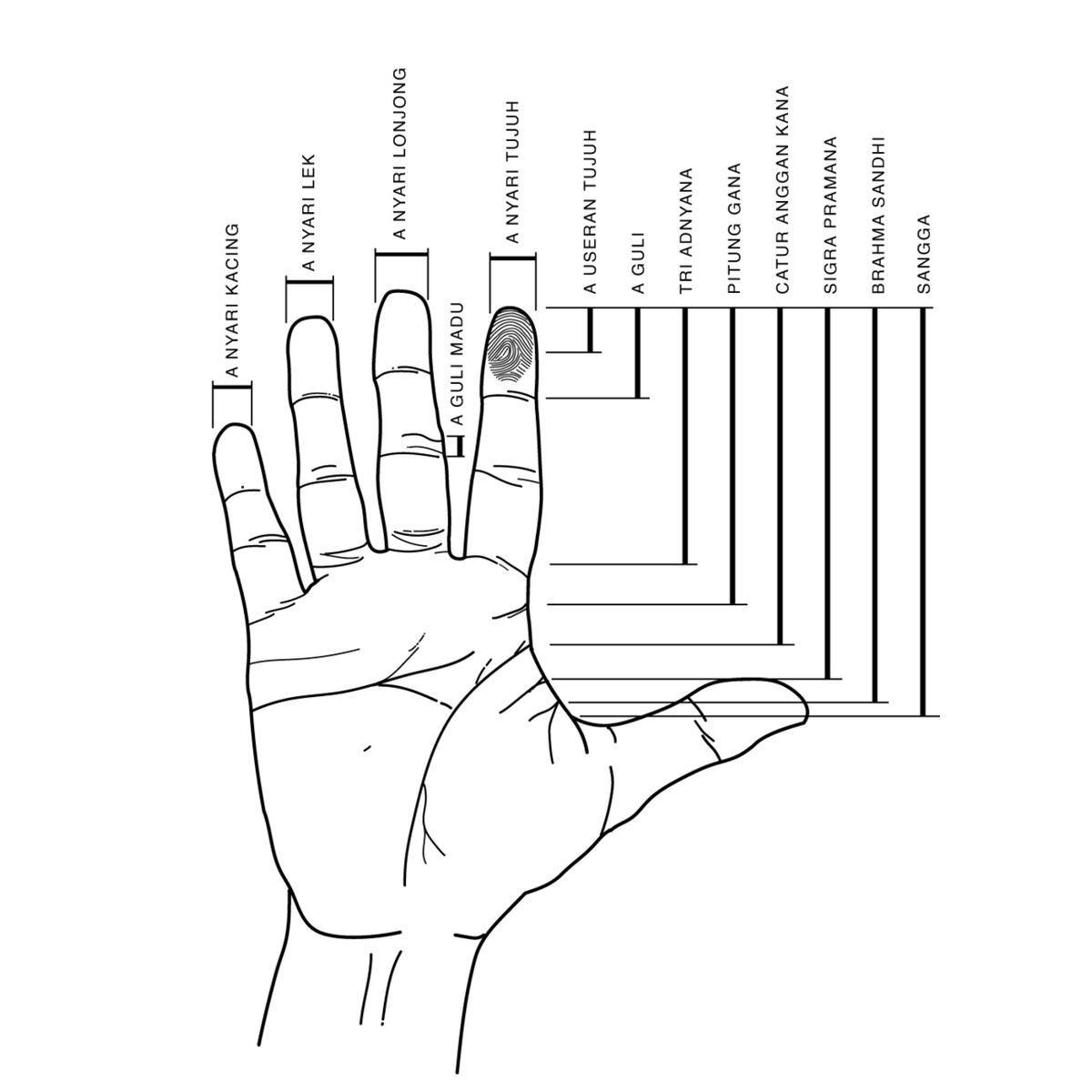
In Bali, none of this applies. Building there runs on a system called sikut, and its units are the body of the person who will live in the house. Depa is the span of his outstretched arms. Hasta is elbow to fingertip. Tampak is the length of his foot. A stake goes into the ground and every dimension follows. Two compounds that look identical are not the same size, because the men who commissioned them were not the same size. The house is the size of the man.
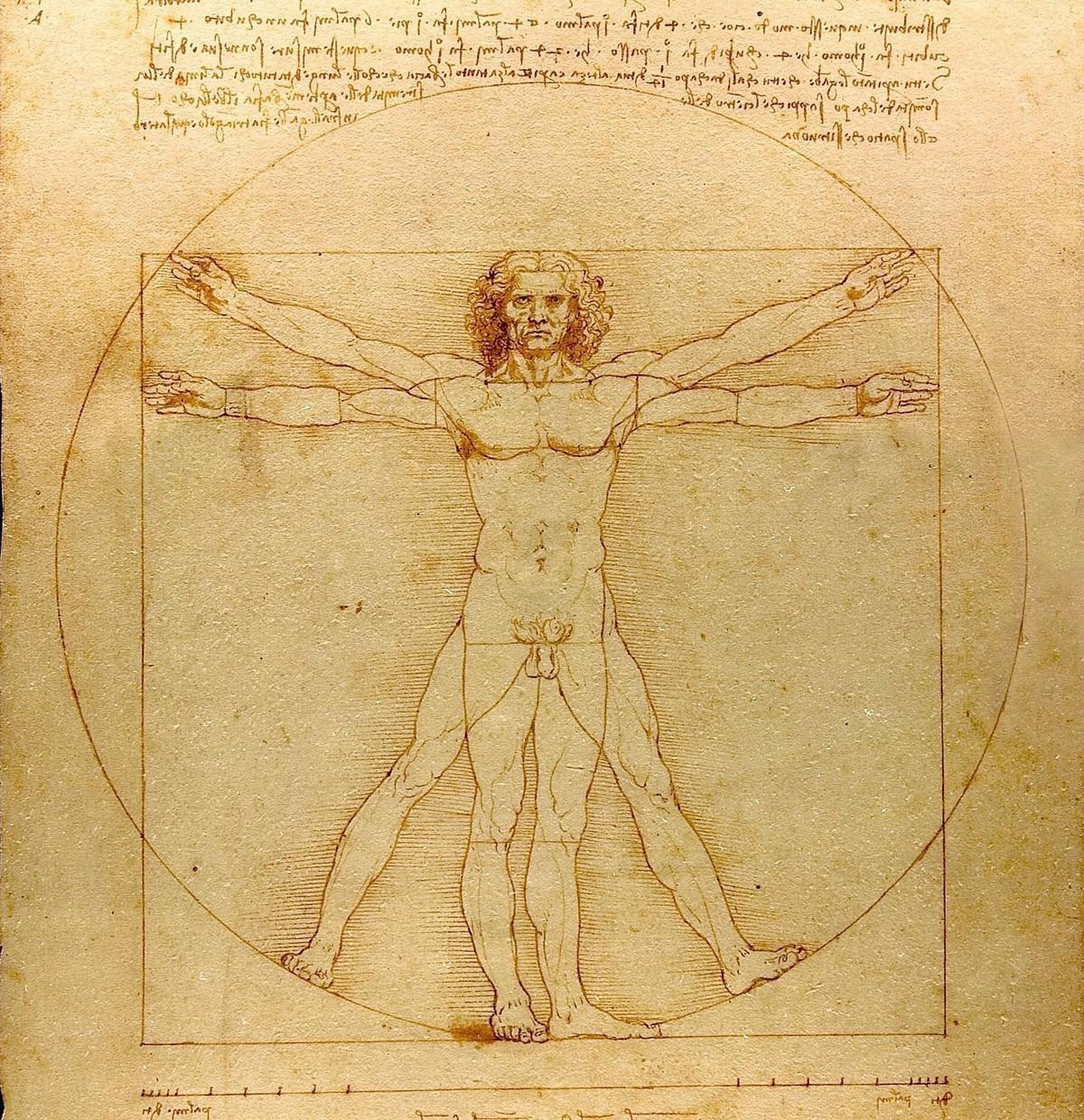
The West has spent two thousand years trying to get back to this. Vitruvius wanted temples proportioned like a well-made body. Le Corbusier made the last serious attempt with the Modulor in 1943, and his problem was deciding which human. He started with a 1.75 metre Frenchman until, by his own account, somebody in the office pointed out that in English detective novels the good-looking men, the policemen, are always six feet tall. He moved the figure to 1.83, the numbers fell into round feet and inches, and the century's great humanist proportional system ended up calibrated to a fictional English copper. He had to invent a man, because a universal standard cannot be anybody in particular. Sikut never tried to be universal. It measures one body, the one standing on the site with his arms out.
None of which the brick ever needed. Ten thousand years on, it is still the size of a hand, whatever number we print on the box.
The drawing forgot. The material didn't.
The rest of the work, all drawn in millimetres, is at atropicalarchitect.com.
If you know your own armspan without measuring it, reply and tell me. Almost nobody does, and it is roughly your height.
See you next week,
Danny