Issue 17 ·
Take Off Your Shoes
Half of you are about to be offended.
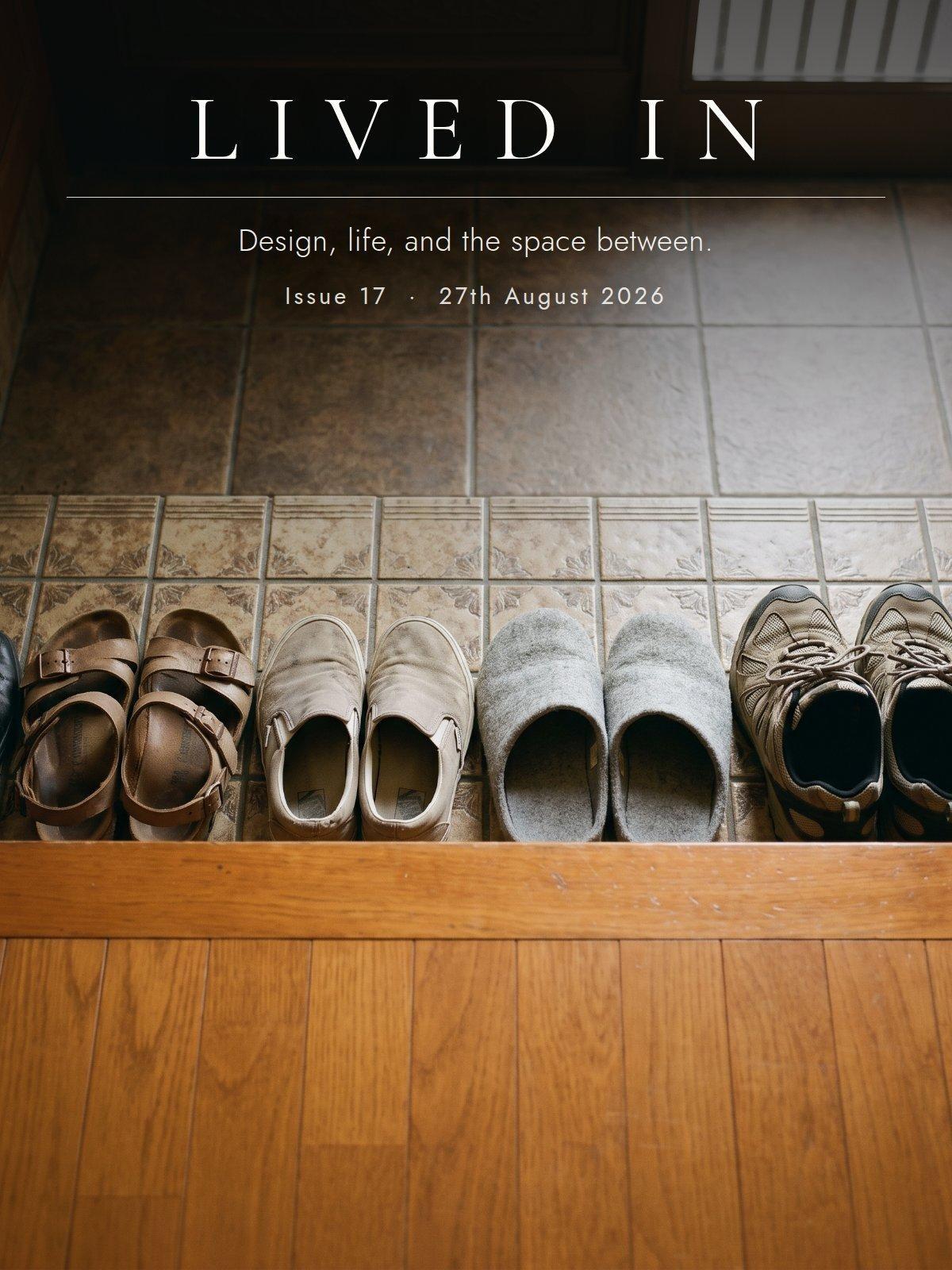
Some of you are reading this with your shoes on. Indoors. In your own home. And roughly half the world would like a word.
There is no neutral position on this. Either the floor of your house is an inside, something clean enough to sit on, eat off, put a sleeping baby down on, or it is simply more street with a roof over it. Whole civilisations picked a side, and then spent centuries building the consequences.
Most of the West kept its shoes on (Scandinavia, as usual, quietly knew better), and so life went up. If the floor is street, you get away from it: chairs, sofas, beds on legs, everything hoisted clear of the ground. An entire furniture industry is, among other things, compensation for a surface nobody wanted to touch. The radiator went on the wall because nothing worth heating happened below your knees.
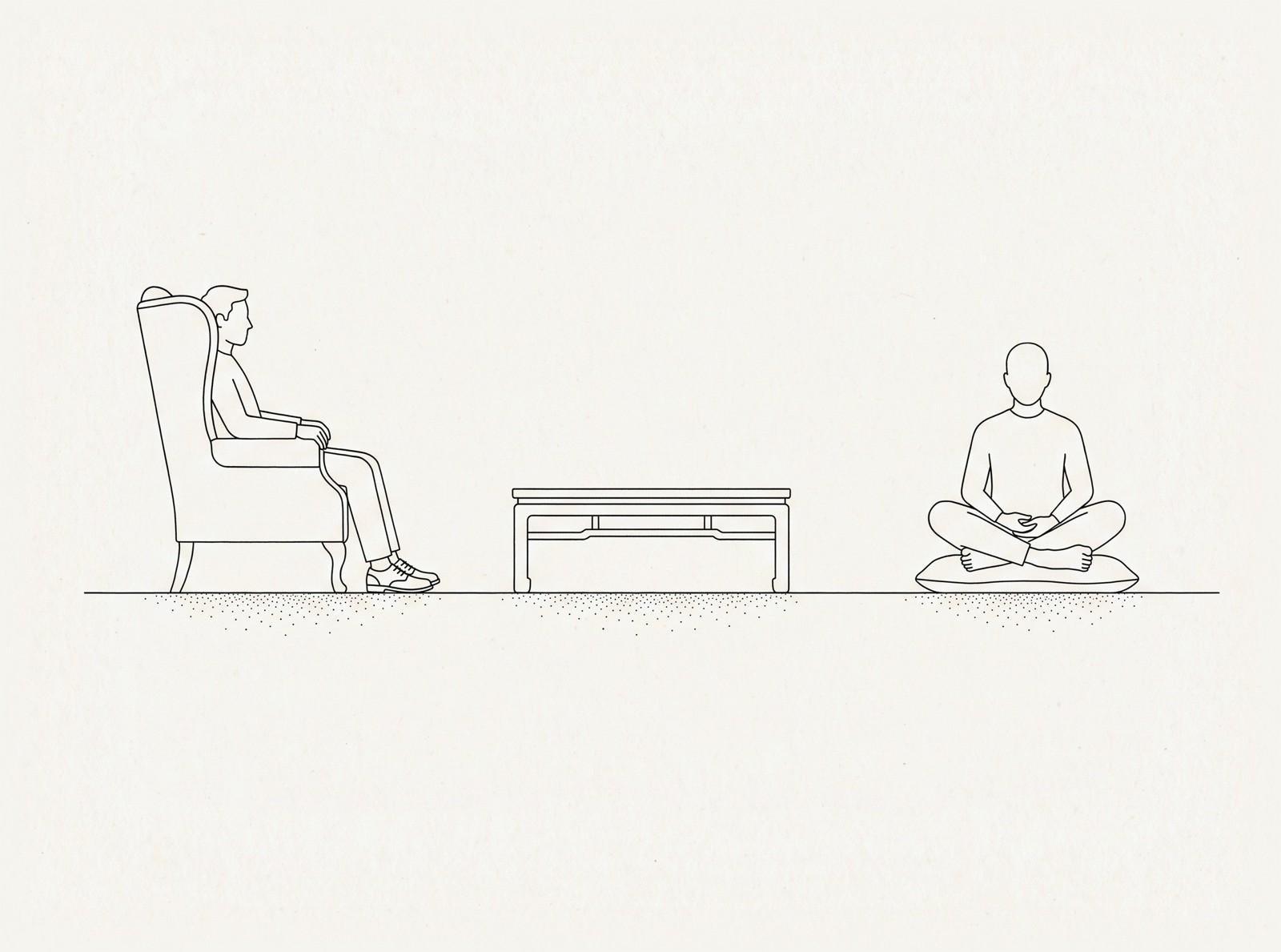
Asia took its shoes off, and life settled downwards. If the floor is clean, it becomes the largest piece of furniture you own. You eat at it, sleep on it, and the architecture starts investing in it instead of fleeing it.
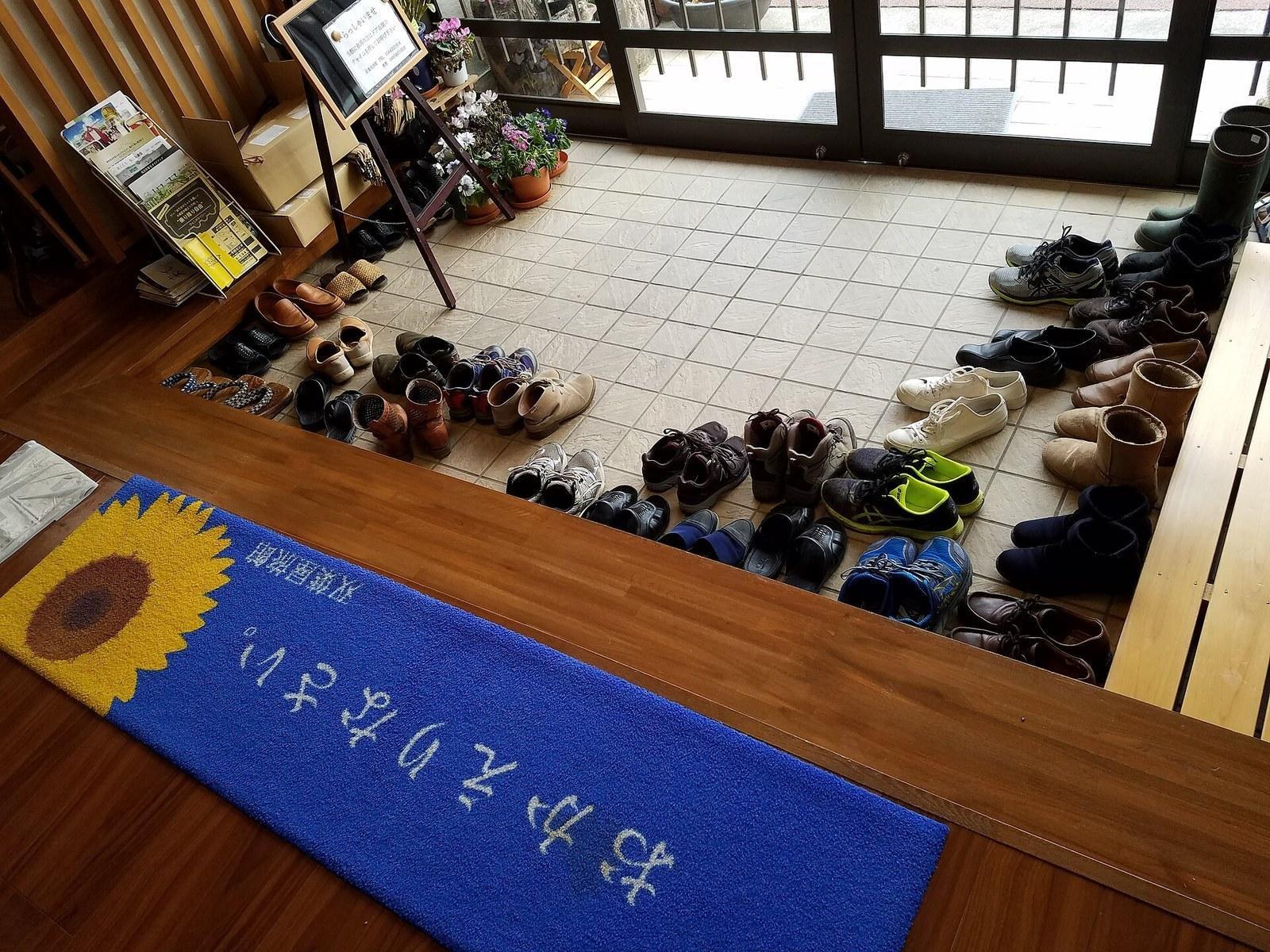
Japan gave the divide a room of its own. The genkan is a sunken entry, a piece of outside brought indoors, finished lower than the house so the shoes stay below and the house begins above. The step up has a name, the agari-kamachi, and the language follows the section: in Japanese, entering someone's home is agaru, to go up. You do not walk into a Japanese house. You ascend into it.
Korea found the cheat code: heat the floor. The ondol runs the smoke of the kitchen fire through ducts beneath the room, making the floor the warmest surface in the house. And once it is the warmest thing you own, everything in life migrates onto it: low tables, mats laid straight over the heat, the best seat in the house now the house itself. Shoes off was never politeness. You do not walk street grime across the surface you sleep on.
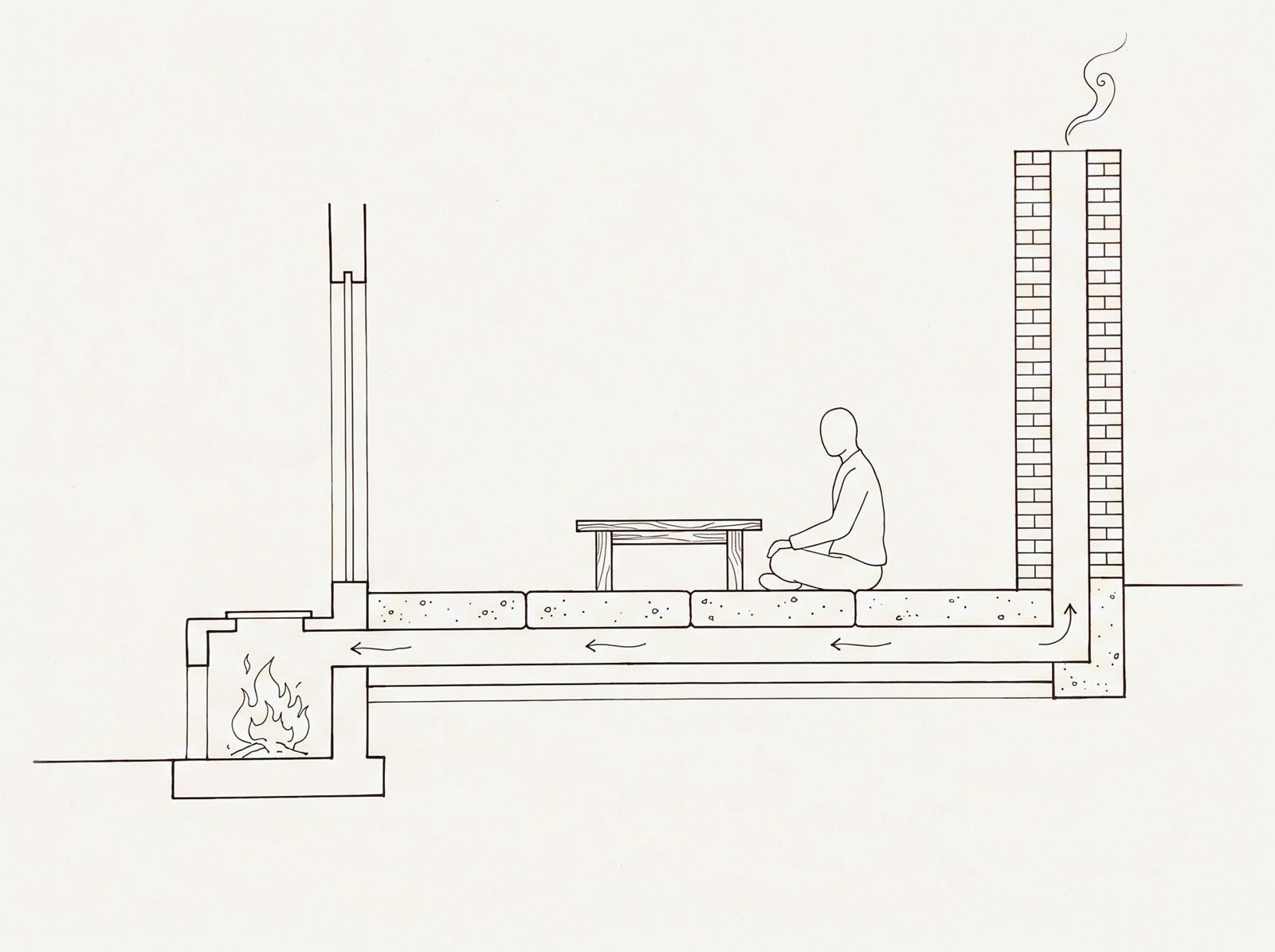
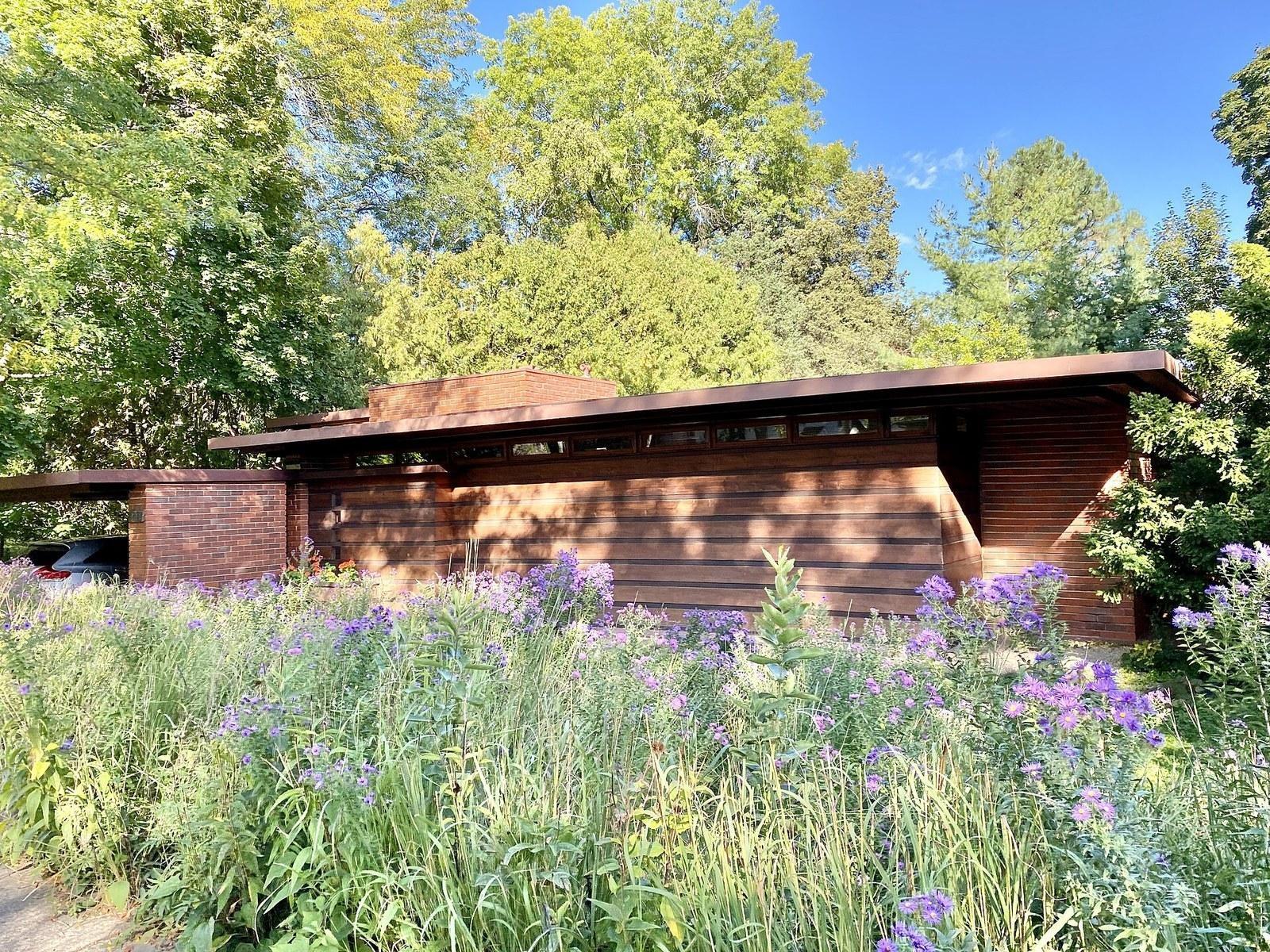
Then, one winter evening in Tokyo, the West got a look. Frank Lloyd Wright was at dinner at Baron Okura's residence and was led afterwards into what he called the Korean room for coffee. Warm everywhere, and nothing to see: no stove, no radiator, no fire. Wright called it "a matter not of heating at all but an affair of climate," and fifteen years later piped hot water beneath the concrete floor of the Jacobs House in Wisconsin, in 1937. The radiant slab entered modern housing through that evening: a two-thousand-year-old idea from cultures that took their shoes off, imported by a man who kept his on.
I can still hear my mum shouting at me to take my shoes off, and I can still feel how completely I ignored her. I would not dare now. My mother-in-law runs a border regime my childhood self would not survive, and I have converted, with the convert's usual excess: this house operates on tiers of footwear. Slippers, for when the tiles turn cold. Ground-floor shoes. Shoes for outside in your own garden. Shoes that actually leave the property. Nothing crosses a boundary it wasn't issued for.
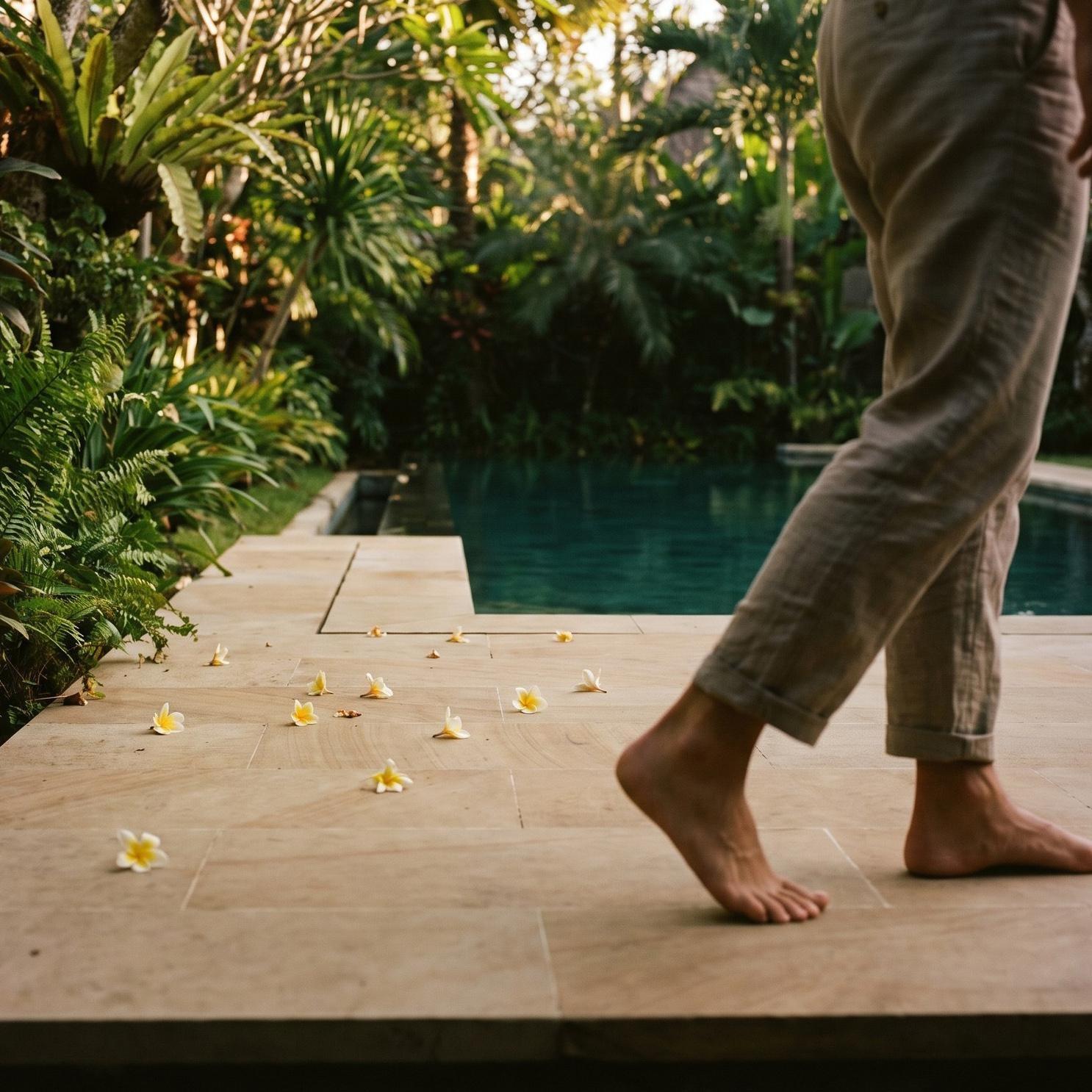
And the test I now hold buildings to is bare feet. A great hotel is one where you leave your room and walk to the pool with nothing on your feet, and never once think about the ground. No gravel that bites, no scorching stone, no gritty grout line. I design to the same rule: from any corner of the house, across the terrace, into the garden, barefoot the whole way. If a path fails barefoot, the path is wrong. The drawing calls it flooring. Your foot knows it's furniture.
So look down. Shoes on: your furniture is tall, your floor is a road, your radiators cling to the wall. Shoes off: somebody back down the line decided the floor was worth living on.
The house doesn't start at the front door. It starts where the shoes stop.
If your household has a shoe rule, and especially if it has ever caused a diplomatic incident with a guest, reply and tell me. I collect these.
See you next week,
Danny